Mortgages
Fed Hike Odds Hit 80 Percent. Here's What It Really Means for Mortgage Rates

The Federal Reserve just held rates steady, and markets now put the odds of a rate hike in December at around 80 percent. Not a cut. A hike. With 30-year mortgage rates already above 7 percent, it is natural to assume 8 percent is next. It is not automatic, and the reason surprises most people.
Below: what the Fed actually did, why your mortgage rate does not follow the Fed directly, the payment on a $400,000 loan at every rate from 6 to 8 percent, the comeback of adjustable-rate mortgages, and a plan for buyers, waiters, refinancers, sellers and renters.
What the Fed did on October 28
The Fed kept its federal funds target at 3.75 to 4 percent. The vote was 10 to 2, and the two dissenters, Lisa D. Cook and Beth M. Hammack, wanted another quarter-point increase. The statement described economic activity as "expanding at a strong pace" and said inflation "remains elevated." It did not mention rate cuts.
The next day's data supported that view. RealtyWire's weekly roundup reports real GDP grew at a 3.4 percent annual rate in the third quarter, and the PCE price index, the Fed's preferred inflation gauge, rose 3.6 percent from a year earlier in September. Put together, traders now see roughly an 80 percent chance the Fed raises rates at its December 8-9 meeting.
Housing is the part of the economy absorbing the pain. Residential investment fell at a 3.3 percent annualized pace in the third quarter, and Redfin's pending home sales hit the lowest level in its records going back to 2021.
Why mortgages don't follow the Fed
The Fed sets a short-term rate for overnight lending between banks. Your 30-year mortgage is a long-term loan, priced off long-term bonds. Lenders watch the 10-year Treasury yield, which averaged close to 5 percent last week, and add a spread that covers their risk and costs:
- 10-year Treasury yield: about 4.98 percent
- Mortgage spread: about 2.26 points
- Result: roughly 7.24 percent, right where Freddie Mac's survey landed
That is why mortgage rates actually fell the day after the Fed signaled it could hike. Bonds rallied as stocks slumped and investors looked for safety. Freddie Mac's 7.24 percent is the lowest reading this month, though still well above the 6.17 percent of a year ago.
The key point: a hike that markets already expect is largely priced in. What moves mortgage rates next is whether inflation and jobs data surprise. That makes the October jobs report and the inflation data before December 8-9 more important to your rate than the Fed headline itself.
The payment math, 6 to 8 percent
Take a $400,000, 30-year fixed loan, principal and interest only:
- 6.17 percent (a year ago): about $2,442 a month
- 7.24 percent (today): about $2,726 a month, $284 more than last year
- 7.50 percent: about $2,797
- 7.75 percent: about $2,866
- 8.00 percent: about $2,935
So the jump from today's rate to 8 percent is about $209 a month. Real money, but not the cliff the headlines suggest. Over 30 years it adds up, though: total interest at 7.24 percent is about $581,000, and at 7.75 percent it is over $631,000. Half a point on $400,000 is roughly $50,000 more interest over the life of the loan. Mortgage Professional America estimates the run-up since late February alone has added about $350 a month on a $400,000 loan.
The ARM comeback, and its catch
Adjustable-rate mortgages made up 11.3 percent of applications in the week ending October 23, the highest share in more than a year, according to the Mortgage Bankers Association. The appeal is simple: the average 5/1 ARM rate was 6.41 percent, versus 7.37 percent on a 30-year fixed in the same survey.
On our $400,000 loan:
- 30-year fixed at 7.37 percent: about $2,761 a month
- 5/1 ARM at 6.41 percent: about $2,505 a month
- Savings: about $257 a month, roughly $15,400 over the five fixed years
Now the fine print. The ARM averaged 1.20 points versus 0.76 on the fixed, which on this loan is about $1,760 more up front. And after year five, the rate resets. If it resets one point higher, to 7.41 percent, the payment becomes about $2,742. Two points higher, to 8.41 percent, and it is about $2,989. Lenders also typically qualify you at a higher rate, often the start rate plus the first cap, so an ARM may not stretch your budget as far as it appears.
An ARM can make sense if you expect to sell or refinance within five to seven years, if you can afford the payment at the lifetime cap and not just the starting rate, and if you have read the caps, written like 2/1/5: the most the rate can rise at the first reset, at each later reset, and over the life of the loan.
What you can do
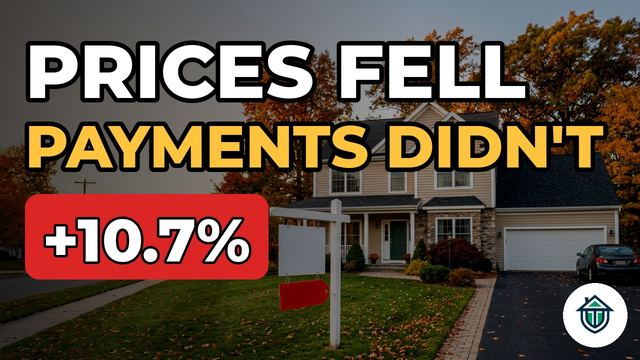
Buying now: Redfin says the median sale price just slipped below last year's for the first time in over three years. Negotiate price and seller credits you can use to buy down your rate. Lock when you are under contract and ask whether a float-down option is available. Stress-test your budget at half a point above your quote.
Waiting: watch the 10-year Treasury and the inflation reports, not just the Fed. Keep your credit clean and your down payment liquid so you can move quickly if rates dip.
Refinancing: divide your closing costs by your monthly savings. That is your break-even in months. Compare break-even, not just rate.
Selling: buyers shop by monthly payment. Pricing to today's rates beats chasing last year's comps, and a credit toward the buyer's rate buydown can do more for their payment than the same dollars off the price.
Renting: CNBC reports rents rose for the first time in three years, so locking in a longer lease at today's rent may protect you.
Watch the video
Sources
- Freddie Mac Primary Mortgage Market Survey, October 29, 2026 (30-year 7.24 percent, 15-year 6.60 percent; 6.17 percent a year ago): freddiemac.com
- Federal Reserve, FOMC statement, October 28, 2026: federalreserve.gov
- RealtyWire, Week in Housing (Fed, GDP, PCE, 10-year, housing data), October 31, 2026: realtywire.com
- Mortgage Professional America, 30-year rate dips to 7.24 percent (CME FedWatch about 80 percent December hike odds), October 29, 2026: mpamag.com
- Mortgage Bankers Association, Weekly Applications Survey, week ending October 23, 2026 (ARM share 11.3 percent, 5/1 ARM 6.41 percent): mba.org
- Realtor.com Economic Research, October 29, 2026: realtor.com
- CNBC, home prices fall and rents rise, October 29, 2026: cnbc.com