Home insurance
Why Home Insurance Keeps Rising in 2026, and 7 Ways to Lower Your Premium
Home insurance rates are still climbing in 2026, and for a lot of families the bill has quietly grown larger than the property tax. If your renewal notice made you wince this year, you are not imagining it. Here is why homeowners insurance keeps getting more expensive, the good news buried in this year's rate filings, and seven practical moves that can bring your own premium down.
How big the increase is
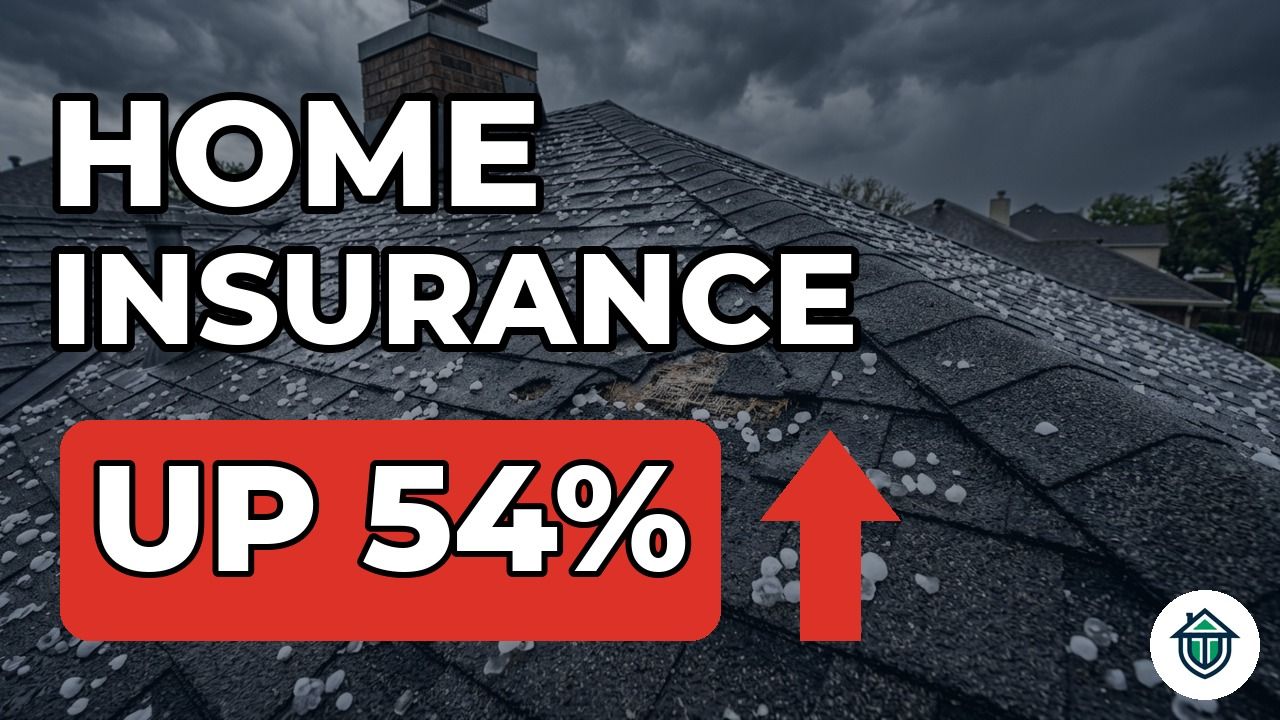
A Zillow and Thumbtack analysis released October 22, 2026 found homeowners insurance premiums are up 54 percent over the past five years, far faster than maintenance costs (up 32 percent) or property taxes (up 19 percent). Bloomberg Intelligence, reported by Claims Journal on October 20, found that the average home insurance premium now exceeds the average property tax bill in two-thirds of U.S. counties.
In dollars, Insurify's data puts the average annual premium at $2,636 at the end of 2024, up 12 percent to $2,948 by the end of 2025, and $3,012 by mid-2026, with $3,057 projected by year-end. Different companies measure premiums differently, so your number may be higher or lower, but the direction is the same.
Why premiums keep rising
Weather, and not just hurricanes. The Insurance Information Institute (Triple-I) reports that tornadoes, hail, straight-line winds and severe thunderstorms caused $51 billion in U.S. insured losses in 2025, the third straight year above $50 billion and more than any other category of natural disaster. Triple-I says hail can account for as much as 80 percent of severe storm claims in a given year, and roofs make up an estimated 70 to 90 percent of insured residential catastrophe losses. A lot of what you pay comes down to the roof over your head.
It is not a one-region problem. State regulators, through the National Association of Insurance Commissioners (NAIC), found that from 2018 to 2024, even after adjusting for inflation, average premiums rose 18 percent in the Northeast, 25 percent in the Midwest, 27 percent in the Southeast and 43 percent in the West.
The cost to rebuild. As the NAIC explains, your premium is tied to what it would cost to rebuild your home, not what it would sell for, so higher labor and material costs flow straight into premiums. Reinsurance, the insurance that insurers buy for themselves, has also been expensive, and those costs work their way to homeowners through rate filings.
Fewer options. The NAIC found insurer-initiated nonrenewals per thousand policies have risen since 2018 by anywhere from 96 percent in the Southeast to 216 percent in the West. Less competition tends to push prices up for everyone.
The good news
The increases are slowing. NerdWallet's analysis of rate filings found 81.6 percent of insurer filings sought increases in 2024, 68.7 percent in 2025 and 53.6 percent so far in 2026, with a median requested change of just 1 percent this year. Premiums fell in 18 states and Washington, D.C. between early 2025 and early 2026. Insurers' own costs are easing too: NerdWallet notes global property catastrophe reinsurance rates fell about 15 percent at the January 2026 renewals, and U.S. pricing fell another 20 to 25 percent in July. That does not guarantee your bill goes down, but more insurers may be competing for good customers right now.
Meet Dana
Dana is a fictional homeowner with good credit and no claims, living in a house built in the 1980s, with a $1,000 deductible, paying $2,564 a year, the national median in NerdWallet's 2026 study for that kind of home. In the same study, a 1984-built home cost 81 percent more to insure than a brand-new one, a gap of $1,149 a year, up from 59 percent in 2023. Roof age is part of it: NerdWallet cites research finding shingles weathered just two years were roughly 10 times more susceptible to severe hail damage than new ones.
What you can do: 7 ways to lower your premium
Shop before your renewal, not after. With insurers asking for smaller increases this year, a competing quote has a better chance of beating your renewal offer. Insurify has found price differences of up to 47 percent between the cheapest and most expensive insurers for homes of equal value. Get at least three quotes and compare the same coverage line by line.
Consider a higher deductible. In NerdWallet's analysis, moving from a $1,000 to a $2,500 deductible cut premiums by 11.4 percent. For Dana, that is about $292 a year. The catch: she now pays the first $2,500 of any claim, so only do this if that money is already in savings.
Think twice before filing small claims. NerdWallet found a single wind or weather claim raises rates 10.2 percent nationally, about $261 a year for Dana. Say a storm does $1,500 of damage to a fence. With a $1,000 deductible, the insurer pays $500, and the surcharge could cancel that out in about two years. Some states limit these surcharges, so check your state's rules.
Protect the roof. According to Insurify, ten states require insurers to offer discounts for certain roof upgrades, and states like Louisiana and Arkansas run grant programs to help pay for them. Ask your state insurance department what is available. If you are shopping for a home, get insurance quotes before you make an offer, because roof and home age can change your monthly cost more than you would expect.
Stack every discount. The NAIC suggests asking about bundling home and auto, and discounts for smoke detectors, burglar alarms, monitored security systems, deadbolt locks and sprinklers. Insurify also points to discounts for paying in full, autopay and being a retired senior. None are guaranteed, but asking costs nothing.
Work on your credit. In most states, insurers use a credit-based insurance score in pricing. Insurify found a homeowner with excellent credit can pay up to 26 percent less for a similar policy, although some states limit how credit can be used.
Cut cost, not protection. Before trimming coverage, check two things the NAIC flags: is your deductible a flat dollar amount or a percentage of your home's insured value, and does your policy pay replacement cost or actual cash value? Insurify notes that in hail-prone areas, more insurers now cover roofs at actual cash value, meaning depreciation comes out of your payout. A cheaper policy that pays far less after a storm is not a bargain.
The bottom line: home insurance rates are rising more slowly, but from a much higher starting point. You cannot control the weather, but you can control when you shop, how you set your deductible, which claims you file and how well your roof holds up. This week, pull out your declarations page and get three quotes before your next renewal.
Watch the video
Sources
- NerdWallet, 2026 Home Insurance Rates Report, October 2, 2026: nerdwallet.com
- Zillow and Thumbtack, hidden costs of homeownership, October 22, 2026: zillow.com
- Bloomberg Intelligence via Claims Journal, October 20, 2026: claimsjournal.com
- Insurify, 2026 Insuring the American Homeowner report: insurify.com
- Insurify, mid-year 2026 home insurance rates, September 15, 2026: insurify.com
- Insurance Information Institute, severe convective storm losses, April 14, 2026: iii.org
- NAIC homeowners report, via CNBC, August 6, 2026: cnbc.com
- NAIC, "Why Are My Insurance Premiums Increasing?": content.naic.org